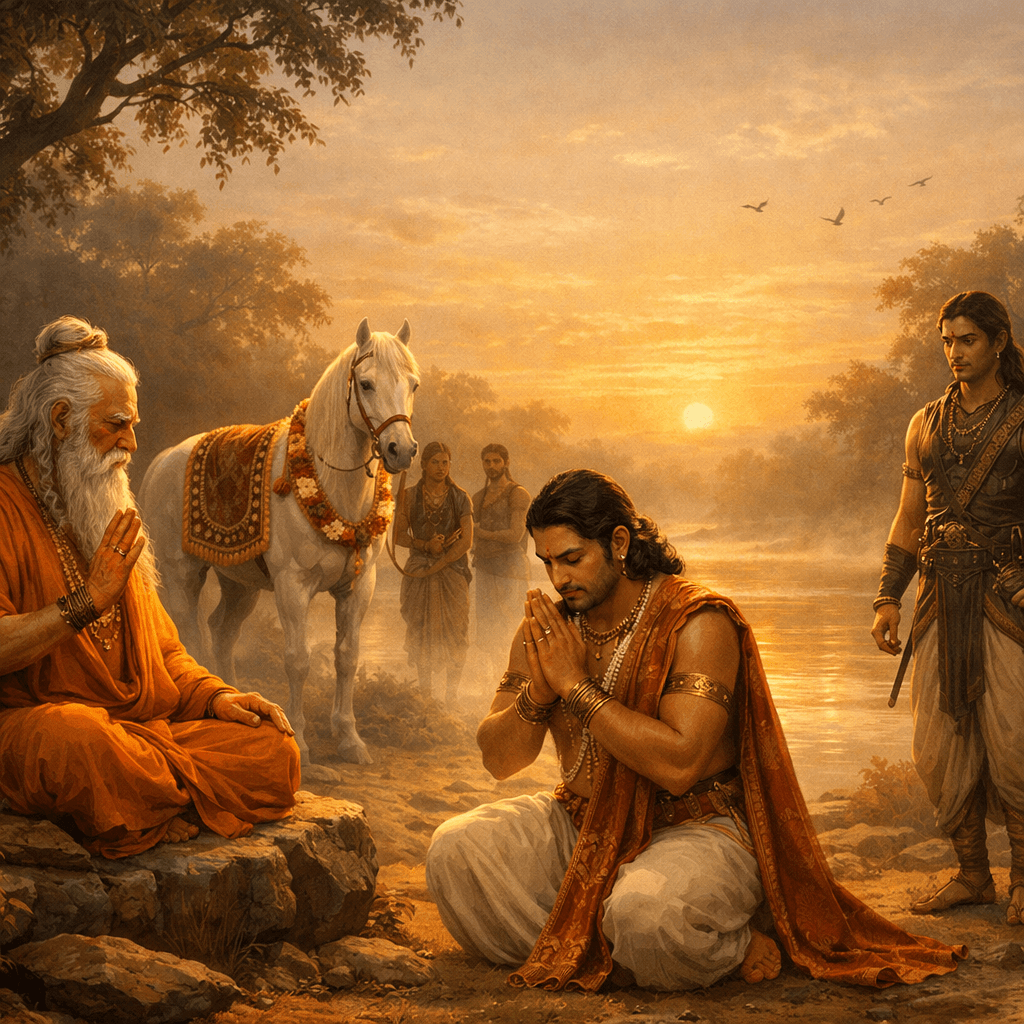
Bhavishya Purana Khila is the hundredth Upa Parva included as the final Maha Parva. Vedavyasa Maharshi had taught all eighteen Maha Puranas to his disciples. Khila means appendix to the main Mahabharata pages.
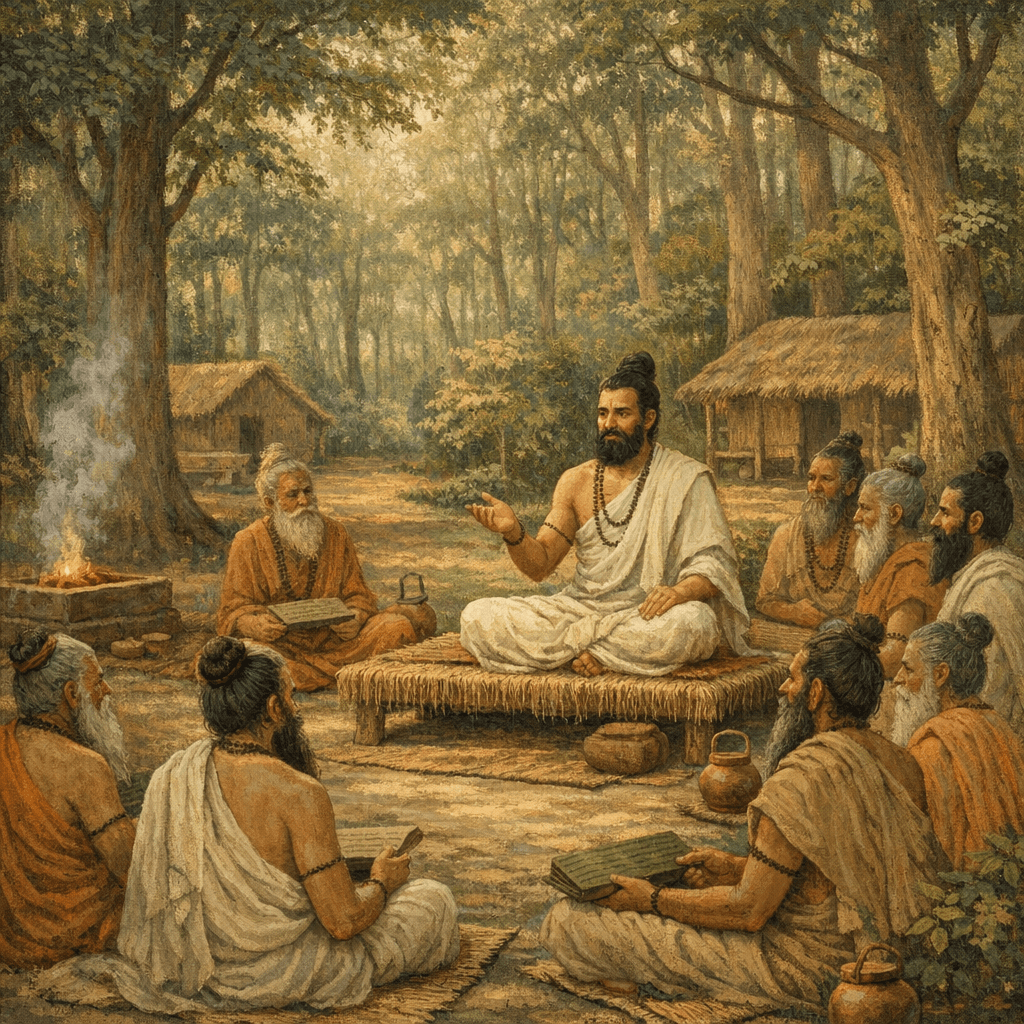
The assembly of the Rishi people in the court of King Shatanika desired to hear the Bhavishya Purana. Prince Shatanika was a young baby sitting on the lap of his father, Janamejaya, during the serpents’ yajna and heard the Mahabharata histories of his ancestors. Vyasa was alive since he was Chiranjeevi, but the generation had changed.
After assuming the charge of the empire, Shatanika had heard the Mahabharata once again, but at the end of conclusive days, desired to hear one more new Purana, since he was already reading the Bhagavata Purana frequently. Hence, this Purana was recited.
In the later editions, this had been edited since India had been ruled by many kings and subjected to their will and orders. Hence, the Bhavishya Purana had been suitably edited to please the ruling kings from time to time. The Jain kings had influenced Sanskrit literature during their regime, and hence the Khila Harivamsha Purana was already edited, as mentioned in the previous article on this website.
Later, the Buddhist kings, the Islamic rulers and the recent British rulers had influenced the Sanskrit literature, thereby trying to edit the Mahabharata or Puranas. The re-writers tried to satisfy the rulers, and hence the latest Bhavishya Purana had evolved in Sanskrit. Later, an optimised version of the Bhavishya Purana was compiled.
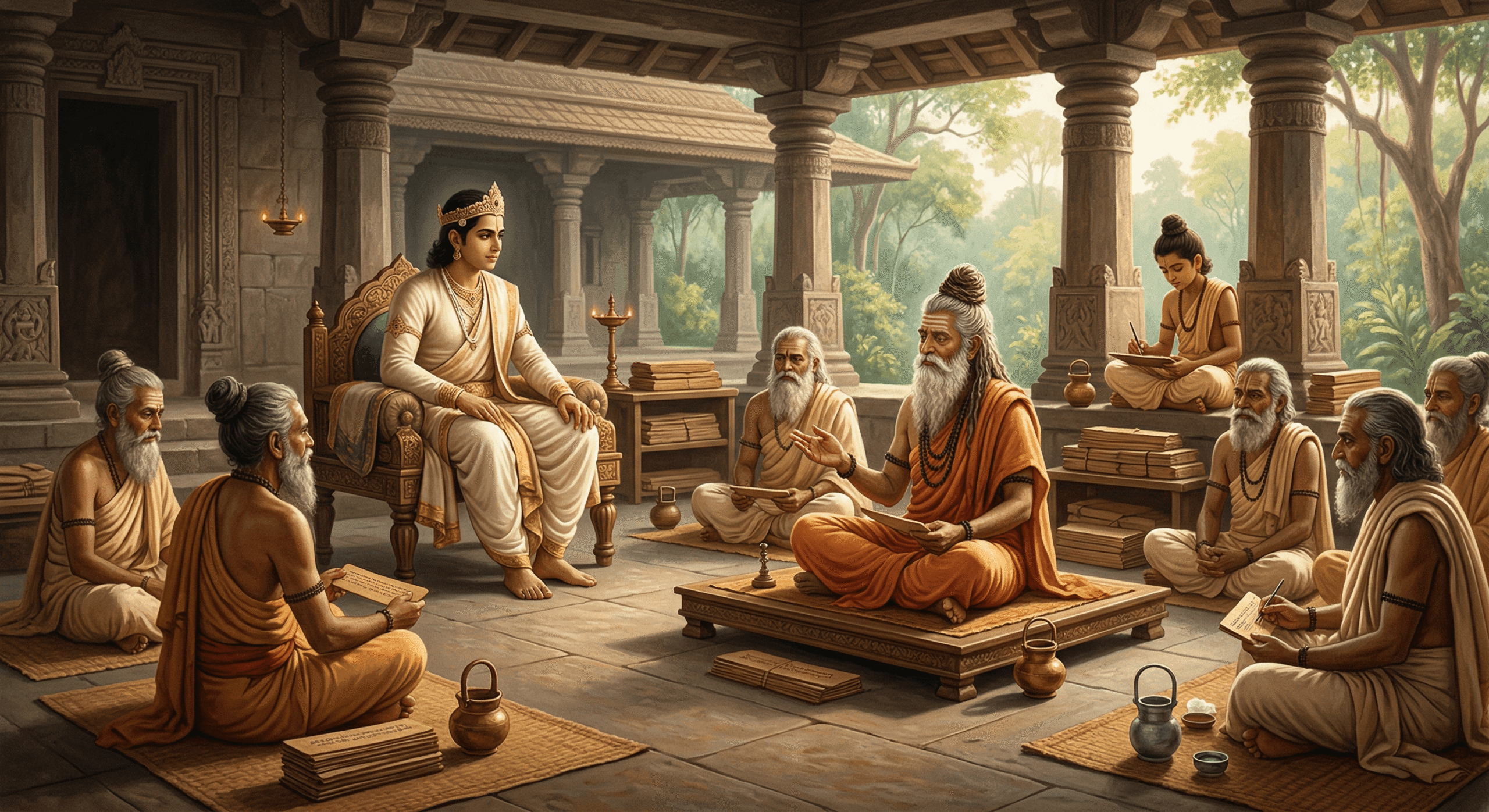
The main purpose of the publishers was to uphold the Sanatana Dharma Principles. Sanatana Dharma possessed an inherent property of sustainability in any situation elsewhere within India; the publishers were showing a soft approach to rulers in the literature compilation works.
Sumantu was a disciple of Vedavyasa Rishi and an expert in the Atharva Veda. But in the Amarakosha lexicon, the word Atharva Veda was barred, and only Arthashastra was permitted. It had two prominent branches, the first one being the Shaunakiya branch and the second one being the Pippaladaya branch (Pippaladaya).
Bhavishya Purana was not a Veda but a Purana, had the nature of stories, with recitation attributed to Shaunaka, disciple of Sumantu, under initiatives attributed to Vedavyasa Rishi. Tantra was highlighted more in it, but nothing against Agamas.
What happened to Yuyutsu finally?
Yuyutsu, after crowning Vajra, was relieved from administrative obligations and started his penance inside the Indraprastha Palace at his royal residence (room). After one hundred and twenty years of his age, by yoga Samadhi, he ended his life. Then Kripa was training Pareekshit, and Vajra was ruling in Indraprastha.