Apprenticeship and internship are very old systems that could be seen in Ramayana. The style and words would differ, being in Sanskrit language.
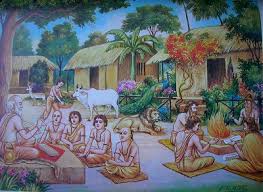
The period of learning the work was called as the apprenticeship. Prior to the actual work, the teacher used to orally tell the verses and the disciple had to by heart them. When the disciple performed the works, the teacher would correct him in case mistakes had been committed. The case of Shunashepa and Vishwamitra could be stated as one of the examples for the apprenticeship in Ramayana.
Rama had lived in Ayodhya during his childhood and as an Emperor later. After receiving his basic education from Vasishta, he had gone to forests with Vishwamitra Rishi for higher education and thereby to get the skill in martial arts. After marriage, for the next fourteen years, he used to live in forests in order to fulfill his father’s words as befitting to the Raghu lineage. Hence, the construction of huts and hermits were necessitated for Rama, to live in the forests areas. Construction works have been taught in Gurukula system and management of projects were personally monitored by administrative aspirant people then and there, in those days.
Also, in those days there was not a separate pedagogical branch, such as now called Civil Engineering. But it was taught in the school of Vishwakarma to the aspirants, clubbed with other applied sciences. The palace of Rama was magnificent in all respects. All facilities as required in the case of a planned city were available in Ayodhya then.
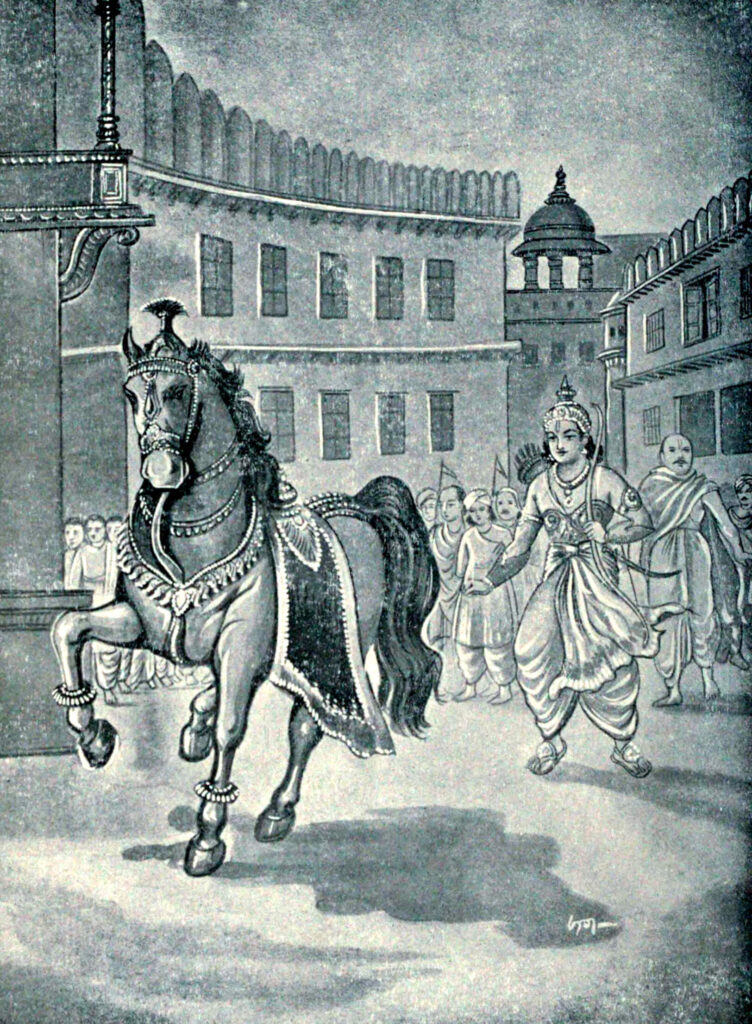
Rama was the ideal royal administrator of any time on this earth. One day, he expressed to conduct the Ashwamedha Yajna with his brothers, Lakshmana and Bharata, as per the decisions of the council of his advisors. Then, the brothers desired to know the effectiveness of the Ashwamedha yajna and fruitfulness after its completion. Many Rishis had visited Rama and he had acquired great experiences. In order to convince them, a live incident had been narrated by Rama as follows:
Rama was the incarnation of God Maha Vishnu. He had born as the son of king Dasharatha and queen Kausalya at Ayodhya. The history pertains to Treta Yuga. When Rama had completed his basic education under the tutorship of sage Vasishta, another sage, Vishwamitra, had appeared in the court of king Dasharatha and demanded Rama be his apprentice. Vishwamitra had a well-built body; he was also a one-time notorious king. But he decided, in his later life, the knowledge regarding the science of fighting and ability for killing should be abandoned and hence acted as a sage, a propagator of peace. Hence he taught the martial sciences to Rama, where his brother Lakshmana also intended to do his internship with him.
Ramayana and Mahabharata are great Indian epics. They have been written in Sanskrit language but translations are available in many languages, throughout the world. Each and every character of the epics had fulfilled their assigned roles during their lifetime and returned to heaven or hell according to their accumulated virtues or sins. Some of the souls could not return from this universe but their physical body had been disbursed into the five fundamental items, namely, earth, fire, water, air and sky.
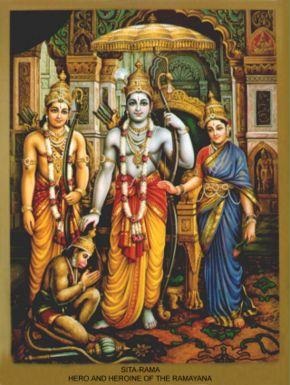
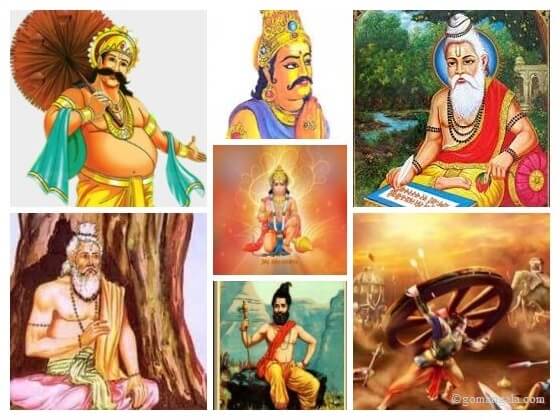
Later, when God appeared in this world as incarnation, like God Rama or Krishna, they had trans granted such souls onto the appropriate end targets, generally in to the heaven. But there are certain relaxations to some persons. The services of Hanuman and Vibhishana were always found necessary in this universe by God Rama. Hence they had been granted uncountable span of life, to live always in this world, exhibiting their own desired choice of physical forms. Hanuman and Vibhishana were called Chiranjeevis of this world after Ramayana. There are five more Chiranjeevis:
Angada was the son of Vali in Ramayana. Both Vali, the father of Angada, and Sugriva, his brother, were orphan children and brought up by Anusuya and Gauthama Rishi in their Ashram. Later, Sugriva and Vali had been adopted by Vriksharaja of Kishkindha. They became happy in that new land, after they were taken over by Vriksharaja. Vali had married Tara, the daughter of physician, Sushena, and Angada was their lone son. When Vali was killed by Rama, Angada was crowned as the prince of Kishkindha and Sugriva had become the king of that country.
Ramayana contained many subjects useful to human life. Originally, the verses were written by Valmiki Maharshi for teaching the children Lava and Kusha. The epic had been presented by him for the use of mankind later. At any time, to regularize the problems of life and to solve them as a reader would be possible after reading it. Researches had been done by the Indian Rishis in the field of dreams, realities and their mutual relevance and the necessities of such dreams also, centuries back. In Ramayana, dreams are referred many times and a few cases could be read as follows, for our knowledge. One must get some benefit by reading Ramayana.
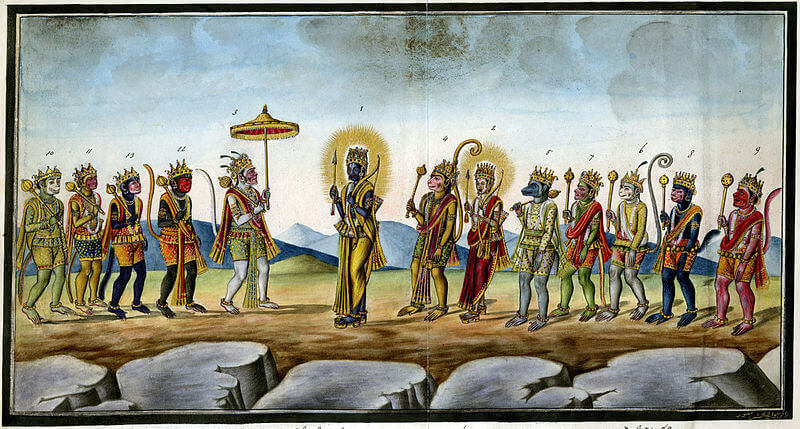
In Ramayana, Mainda and Dwividha were monkeys. The area north from Prasravana Mountain and south from Godavary River, in India was the free moving zone of monkeys and called as Kishkindha. The main palace called Kishkindha palace was occupied by the Monkey King Sugriva and Angada was ruling as the forest prince, since his father was killed in a war.
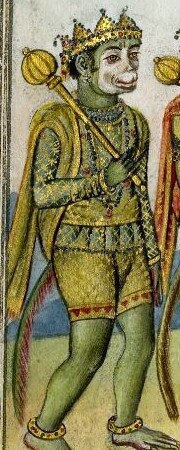
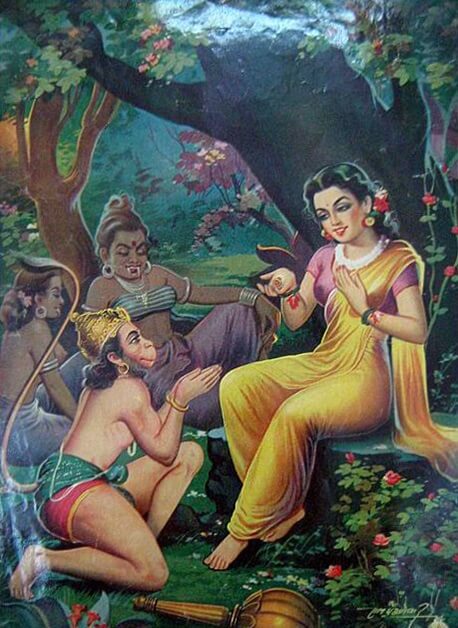
Rama and Lakshmana moved towards the stream Pampa and they had seen the Mountain Rishyamukha. Hanuman greeted them and introduced to Sugriva and then Rama and Sugriva entered into a treaty to be friends and help mutually. Rama killed Vali and then told Sugriva to coronate Angada as the prince of Kishkindha. Then Angada was crowned as the prince of that country, of monkeys, and crowned Sugriva as the King of Kishkindha. However, Hanuman had requested Rama to come into the Kishkindha Palace, for gracing the occasion of coronation of Angada as prince. Rama thought and told him, about his vow, not to enter any village, town or city, as to keep up his promise, done before his father, but to spend fourteen years in the forest, avoiding entry into any village or city.
Rama with Hanuman and Vanara Sena in search of SitaContinue reading
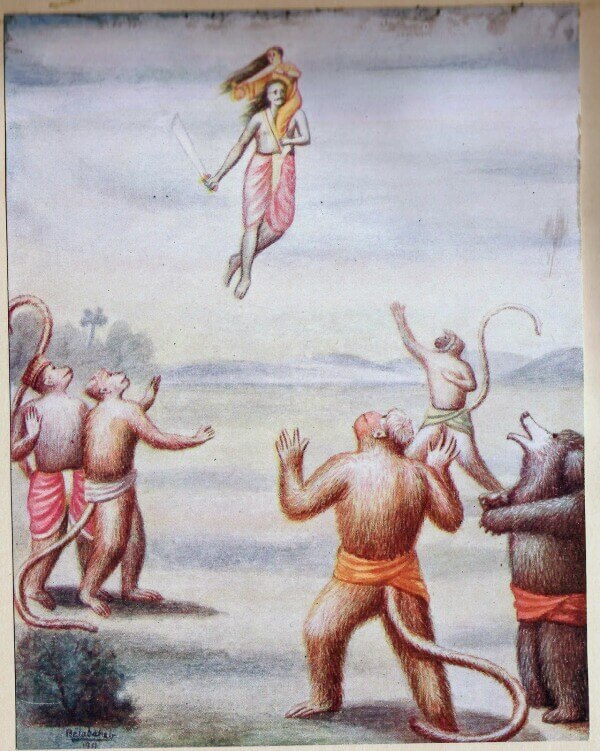
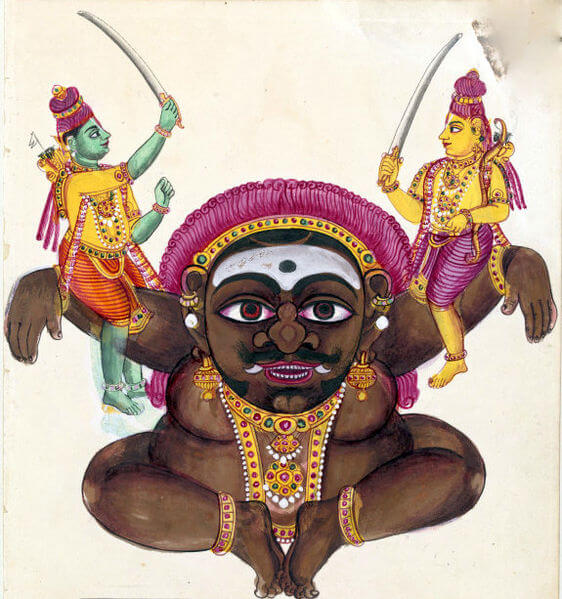
In Ramayana, Ayomukhi and Kabandha were demons. The area north of Lanka and south of Kosala in India was the free moving zone of demons. The main forest area called Dandakaranya was occupied by the fierce demons, and Maricha was ruling as the forest king in charge, since his nephew Kumbhakarnawas sleeping then. He was the maternal uncle of Ravana. Janasthana was the capital of Dandakaranya. It was having road access, south up to River Godavary and north up to River Ganga. Then, the hermit of Rama was very near to Janasthana, from where Sita was abducted by Ravana. He was assisted by Maricha but then, killed by the arrow of Rama. Since Sita was untraceable, they deserted their hermit and started to move, searching towards southern side.