
This article is a simple description of the Indian vegetarian food systems.
Shri Shankaracharya, during his Bharata Yatra (Indian Caravan) visit, found that some parrots were repeating the Vedic verses like human beings. Shringeri Goddess Sharada Mata is holding a parrot in one hand. There is a symbolic message. A parrot is a pure vegetarian bird. Reciting Vedic Verses is possible, like the natural singing of parrots. This implies that in nature, vegetarian food systems and Vedic verses are correlated.
Hanuman, or Anjaneya, is depicted in the Valmiki Ramayana as a member of the monkey species and a pure vegetarian by nature. Some animals, like cows, horses and elephants, always eat only vegetarian foods. But in this nature, due to ‘Karma Siddhanta’ or maintaining the balance of living species, a few of them are created as non-vegetarians, eating one another or adopting mixed-type diets.
Human beings, by nature, are in the habit of eating vegetarian foods to live, but after baking with fire, some people also eat non-vegetarian foods. In India, some people eat only vegetarian foods.
How are the words diet and deity mutually linked in the Indian context?
Diet means the selective habits of food. This article highlights some of the special features of vegetarian food systems. Hence, alcohol or non-vegetarian foods are not described here. In India, people worship idols, and there are fixed codes of conduct for worshipping idols of Gods. Offering the food to God is a routine part of many families in India. It is a regular practice, and done even today, called as Nitya Naivedya. The worshipped divine idol is called as deity. Thus, diet and deity are always mutually linked.
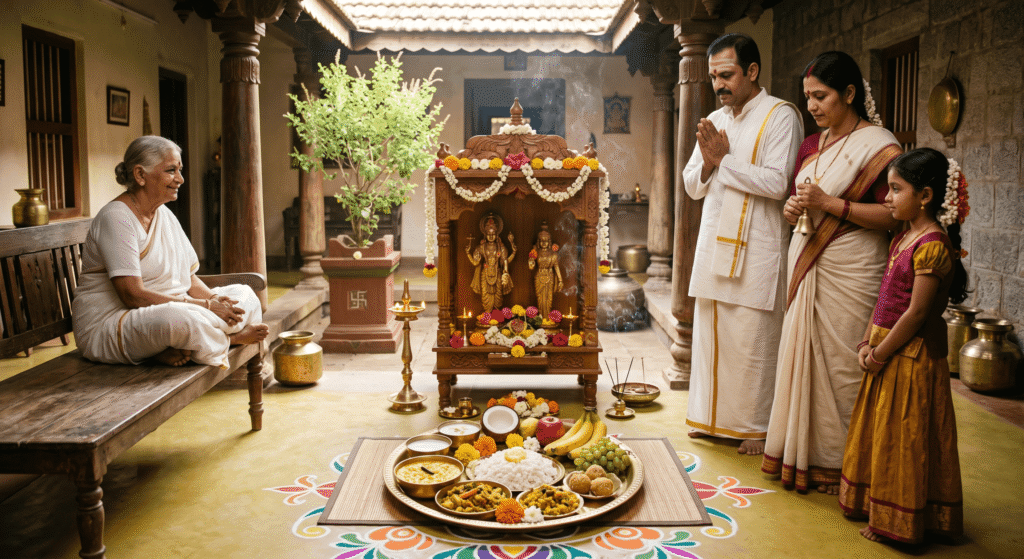
In some houses, after placing the diet before the deity in the Puja room, the conch is blown. The God of Thirupati is referred to as Venkatramana or Venkateshwara. Sweet Laddu is offered as a diet to his deity, and it is called Naivedya. After offering and completion of reciting the relevant ‘Manthras’, the God, being pleased, gifts it back to human beings; it is called as Prasada and later distributed to all devotees present before him. So, laddu is the diet of the deity. The words of offering and all the codes and conduct of the Indian deity are already there in the Sanskrit language, in Vedic Verses and the team of priests used to sing them musically always.
What is the Ekadashi diet system?
Some people observe fast during the Ekadashi days. The days are marked in advance in the calendars. Usually, the food system is controlled on such days. Some people do not take cooked rice on Ekadashi days. Instead, they take other healthy vegetarian foods. God Vishnu is pleased by observing the Ekadashi diet system. It is better to do Nama japa also on these days, and regarding the benefits of ‘japa’, a separate article is available on this website titled Japa Yajna (name chanting of God).
How do different places compromise with nature with respect to diet systems?
From Mangalore to Trivandrum, in coastal places, and in most of the Assam plain lands, people used to consume boiled rice. In Andhra, Varanasi and Karnataka, people used to consume white rice or raw rice. The reason is the calorific values of food and the living environments in nature.
People also use milk products, which are grouped with vegetarian food systems. In Uttar Pradesh and Haryana, sugarcane products are used more with wheat and its products. Some yogi people across the entire India are in the habit of living by eating the three leaves of the Bilva tree on Shivaratri days. Vishnu devotees do not consume rice products on Ekadashi days. In the Bengal and Assam regions, the diet consisted of many grains offered to the deities.
What is said in the Bhagavad Gita about the food system?
Details around food are mentioned in the Bhagavadgita Parva on this website. In the Bhagavad Gita, more about food classification is available, as told by Krishna. In the Mahabharata book, more about vegetarian food is available, as told by Bhishma.
Is milk a non-vegetarian food?
Milk and its products are treated along with vegetarian food in India.
Which are not generally considered vegetarian food?
Eggs, fish, chicken, mutton or meat are not generally included as vegetarian food. In addition to these items, some other items are also treated as unfit to offer to the deity on some occasions. Such items are papaya fruit, drumsticks, palm fruits, etc.
Which are generally offered as vegetarian food to the fire deity?
Some people in India worship fire daily in the morning. They offer four twigs with a little cow ghee. It is done with the recitation of Sanskrit Vedic verses and an offering. There are various items of offerings during the oblations with various types of Vedic recitations, and the priests are experts in such rituals.
All are vegetarian food systems. No books are required during the rituals, but helpers may be required. Some Ayurvedic herbals are offered during special offerings to the fire, desiring some particular results. One article on this website, titled Graha Shanthi Homa and its significance about the offerings to the fire can be referred to.
How are food and devotion to God correlated?
Devotion to God is considered a good characteristic of human beings. An article with the name ‘Japa Yajna’ is available on this website for the esteemed readers, explaining more about the food, its effect on devotion to God and its results. Let us pray, the holy Gods, always for showering blessings upon us.
Esteemed readers would get solutions to the problems in their lives by browsing this website.
What are the benefits of reading stories on this website?
On this website, some side stories of Shreemad Bhagavatha Maha Purana, some stories of Mahabharata and Ramayana are available for esteemed readers. Vyasa Maharshi had already assured the readers of these stories would be getting the virtuous benefits, sins would be washed away, and the sorrows in life would be eliminated.
On reading this, children would gain more memory power, great moral strength in their lives in future; creating a sense of self-reliance, leading to peace and progress.
Next post, Indian Dress Systems, would be more interesting.
‘Indian Cows’ would be presented separately in another article.
It is humbly prayed for the blessings of God upon us.
Readers may share this story with children, friends and family.
Leave a Reply